Car Accidents Involving Commercial Vehicles: How They Differ from Standard Cases

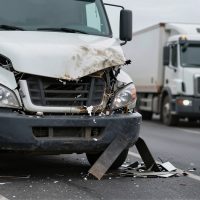
A collision involving a commercial vehicle is rarely handled the same way as an ordinary car accident. The size and weight of delivery trucks, tractor-trailers, utility vehicles, and company-owned vans often lead to more severe injuries and far more complicated legal questions. What initially looks like a straightforward crash can quickly turn into a case involving corporate insurance carriers, federal transportation regulations, and multiple parties pointing blame at one another.
Trucking companies and commercial insurers often move quickly to protect their own interests, especially when serious injuries are involved. Working with an experienced Indianapolis truck accident lawyer can help ensure the claim is investigated with the right focus from the beginning, including who controlled the vehicle, who employed or supervised the driver, whether safety rules were followed, and what insurance coverage may apply.
Why Commercial Vehicle Accidents Are Handled Differently
Most standard car accident cases involve two drivers and their insurance companies. Commercial vehicle accidents are different because the driver is often operating on behalf of a business, contractor, or transportation company. That changes both the investigation and the legal exposure tied to the crash.
The company connected to the vehicle may be responsible for hiring, training, supervision, maintenance, and compliance with safety requirements. A collision may involve far more than a driver making a mistake behind the wheel. Delivery schedules, maintenance practices, internal safety policies, and company oversight can all become part of the case.
Commercial truck accident claims usually involve more evidence, more insurance coverage, and more aggressive defense strategies from the companies involved.
How Federal Trucking Regulations Affect Liability
Federal safety regulations often become a major issue after a commercial vehicle crash. Trucking companies and commercial drivers are subject to rules issued through the Federal Motor Carrier Safety Administration (FMCSA), including requirements involving hours of service, inspections, cargo loading, maintenance, driver qualifications, and drug and alcohol testing.
After a serious truck accident, attention quickly turns to whether those rules were followed. Driver fatigue, skipped inspections, overloaded cargo, or violations involving mandatory rest periods can all point toward negligence.
Commercial truck accident investigations often depend on records most people never see until after a serious crash, electronic logging devices, inspection reports, dispatch communications, maintenance histories, and data pulled directly from the vehicle itself.
Why More Than One Company May Be Responsible
Commercial vehicle cases frequently involve more than one potentially responsible party. Liability may extend beyond the driver to include the trucking company, a maintenance contractor, the owner of the trailer, a cargo-loading company, or another business connected to the vehicle’s operation.
Determining who controlled the vehicle, who maintained it, and who made operational decisions becomes a major part of the investigation. One company may own the truck, another may employ the driver, and a third may handle maintenance or freight operations.
Multiple companies and insurers often lead to multiple legal defenses, with each party trying to reduce its responsibility for the crash.
How Commercial Vehicle Injuries Change the Value of a Claim
Commercial vehicles can weigh many times more than passenger cars, and the force involved in these collisions is often devastating. Victims frequently suffer traumatic brain injuries, spinal cord injuries, fractures, crush injuries, and internal trauma that require extensive medical treatment.
The impact of those injuries reaches far beyond the initial hospital stay. Surgery, rehabilitation, physical therapy, and long-term medical care may continue for months or years. Returning to work is not always possible, particularly when mobility, chronic pain, or permanent impairment becomes part of daily life.
Medical expenses, lost income, and reduced earning capacity often become central parts of the claim because the financial consequences continue long after the crash itself.
Why Commercial Insurance Claims Become More Aggressive
Commercial vehicles are usually covered by larger insurance policies than ordinary passenger vehicles. Higher policy limits also mean higher financial exposure for the companies involved.
Commercial insurers are focused on limiting financial exposure from the beginning. Investigators may be sent to the scene immediately after the collision to inspect vehicles, interview witnesses, review records, and begin building a defense before the injured person has even left the hospital.
The speed of that response can create problems later if important evidence is lost, overwritten, or controlled entirely by the companies involved in the crash.
Why Evidence Disappears Quickly After a Truck Accident
Evidence in commercial vehicle cases can disappear faster than many people realize. Driver logs may be overwritten, surveillance footage may be deleted, and electronic vehicle data may not be preserved unless action is taken early.
Preserving records tied to the truck, the driver, maintenance history, dispatch instructions, and onboard electronic systems can become critical to proving liability later. Once that information is gone, rebuilding the timeline surrounding the crash becomes significantly more difficult.
Comparative Fault Still Applies in Indiana
Indiana follows a comparative fault system, which means the defense may still try to shift part of the blame onto the injured driver, even in a serious commercial vehicle case.
Insurance companies usually look for ways to place part of the blame on the injured driver, including arguments about speed, distraction, following distance, or whether there was enough time to avoid the collision. Any percentage of fault assigned to the injured person can reduce compensation, and crossing Indiana’s legal threshold may prevent recovery altogether.
How the accident is investigated and documented early often plays a major role in how fault is ultimately assigned.
Why Commercial Vehicle Cases Require a Different Approach
Commercial vehicle accident claims are not simply larger versions of ordinary car accident cases. Corporate records, federal regulations, multiple insurance carriers, and evidence that can disappear quickly all become part of the case once the investigation begins.
The focus usually extends far beyond the collision itself. Hiring practices, maintenance records, dispatch expectations, delivery schedules, and company safety procedures may all become relevant when liability is disputed. In a truck accident claim, the issues often reach deeper into how the commercial operation was managed before the crash ever happened.
Contact Lee Cossell & Feagley
If you were injured in a crash involving a commercial truck, delivery vehicle, or company-owned vehicle, understanding how these cases differ from ordinary car accidents can significantly affect how your claim is handled. Lee Cossell & Feagley, LLP works with injured individuals throughout Indianapolis and Indiana to investigate commercial vehicle accidents, identify all potentially responsible parties, and pursue compensation that reflects the full impact of the injuries involved.
Contact Lee Cossell & Feagley today to discuss your case and learn how we can help protect your rights after a serious commercial vehicle accident.