
Car Accidents Involving Commercial Vehicles: How They Differ from Standard Cases
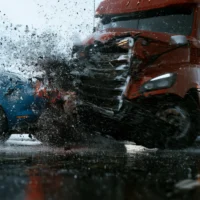 A collision involving a commercial truck, delivery van, company car, or other business vehicle can raise legal issues that do not typically arise in an ordinary car accident. Commercial vehicles are often larger and heavier than passenger cars, and the injuries they cause can be severe. Determining who is responsible can also require an investigation into the driver’s conduct, the employer’s safety practices, vehicle maintenance, and the insurance coverage available.
For people injured in these crashes, understanding these differences is an important step toward protecting their rights. At Lee Cossell & Feagley, LLP, we help injured people throughout Indiana understand their legal options after serious motor vehicle accidents in Indianapolis and statewide.
Multiple Parties May Be Responsible for a Commercial Vehicle Accident
In a typical two-car collision, the investigation often focuses on the conduct of the drivers involved. Commercial vehicle accidents can be more complicated because several individuals or businesses may share responsibility.
The commercial driver may be liable for speeding, distracted driving, following too closely, driving while fatigued, or failing to obey traffic signals. However, the driver’s employer may also be responsible under legal principles that hold employers accountable for negligent acts committed by employees within the scope of their work.
A trucking or transportation company could face additional liability if it failed to screen drivers properly, ignored a driver’s unsafe driving history, provided inadequate training, or pressured drivers to meet schedules that encouraged unsafe conduct. A company that failed to maintain its vehicles or address known mechanical problems could also be responsible.
Other parties may need to be investigated depending on the circumstances. A maintenance contractor could be liable for negligent repairs, while a company responsible for loading cargo could contribute to a crash by allowing an unstable or improperly secured load. A vehicle or component manufacturer could face a product liability claim if defective brakes, tires, steering components, or other equipment contributed to the collision.
Commercial transportation arrangements can also involve vehicle owners, leasing companies, brokers, or separate logistics businesses. Their involvement does not automatically make them liable. The evidence must establish that a party’s conduct or legal responsibility contributed to the accident.
Identifying every potentially responsible party matters because it can affect the available insurance coverage and the ability to recover compensation for serious injuries.
Federal and Indiana Safety Regulations Can Affect the Case
Commercial drivers and motor carriers may be subject to safety requirements that do not apply in the same way to ordinary motorists. Depending on the vehicle, the type of operation, and whether the trip involves interstate commerce, federal regulations administered by the Federal Motor Carrier Safety Administration (FMCSA) may govern important aspects of the driver’s work and the carrier’s operations.
These requirements can address driver qualifications, hours of service, vehicle inspections, maintenance, cargo securement, and other safety practices. For example, hours-of-service rules limit driving time for covered drivers to reduce the risk of fatigue. Electronic logging devices are required for many commercial drivers who must maintain records of duty status.
Indiana also enforces commercial vehicle safety requirements. The Indiana State Police Commercial Vehicle Enforcement Division conducts safety inspections, enforces state and federal regulations, and assists with investigations of commercial vehicle crashes.
A violation of an applicable safety regulation may provide important evidence in an injury claim. For example, records showing that a driver exceeded permitted driving hours, or that a carrier failed to address a known brake problem, could help explain how the collision occurred. A regulatory violation does not automatically establish liability in every case, however. Its legal effect depends on the specific rule, the evidence, and the applicable law.
An investigation may therefore need to examine more than the police report. Driver qualification files, hours-of-service records, electronic logging device data, inspection reports, maintenance records, dispatch communications, and company safety policies may all help establish what happened and whether preventable safety failures contributed to the crash.
Commercial Vehicle Insurance Policies May Provide Greater Coverage
Commercial vehicles often have insurance policies with higher liability limits than personal auto policies. These policies are designed to address risks associated with business transportation, including the potential for serious injuries and significant property damage.
For certain for-hire interstate property carriers operating vehicles with a gross vehicle weight rating of at least 10,001 pounds, federal rules generally require at least $750,000 in public liability coverage for nonhazardous property transportation. Higher minimums apply to certain hazardous-material operations and passenger carriers. The requirements vary according to the type of operation and vehicle.
Higher limits can be important when an accident causes traumatic brain injuries, spinal cord injuries, permanent disabilities, or multiple serious injuries. The cost of emergency care, surgery, rehabilitation, long-term treatment, lost income, and future assistance can be substantial. A policy with greater coverage may provide a more realistic source of compensation than a policy with only minimum personal auto limits.
However, a commercial vehicle does not guarantee that substantial insurance coverage will be available. Some vehicles and operations are subject to different requirements, and a policy’s limits, exclusions, endorsements, and insured parties must be examined carefully. Multiple policies may also apply, depending on who owned the vehicle, who employed the driver, and how the vehicle was being used.
Insurance companies may dispute liability, the extent of the injuries, or the amount of damages. Even when a business has substantial coverage, the insurer’s goal is not necessarily to pay the full amount an injured person claims. Reviewing the available policies and determining which coverage applies can be an important part of preparing a claim.
Evidence Must Be Preserved Quickly
Commercial vehicle accident claims can depend on records that are not typically available in an ordinary car accident case. Some evidence is held by the driver or the trucking company, and certain electronic records may be overwritten or lost as time passes.
In addition to photographs, witness information, police reports, and medical records, an investigation may need to obtain driver logs, electronic logging device data, vehicle inspection and repair records, onboard camera footage, GPS information, dispatch messages, and employment or training records. The precise evidence depends on the type of vehicle and the circumstances of the crash.
Preserving this information can be particularly important when a company disputes the driver’s conduct or claims that a mechanical problem did not contribute to the accident. An attorney can take steps to request relevant records and, when appropriate, send a preservation letter asking the company to retain evidence that could be important to the claim.
In some cases, an expert may need to inspect the vehicle, analyze physical evidence, or reconstruct the collision. Prompt investigation can help prevent the loss of evidence needed to evaluate fault and damages.
After a crash, injured people should seek appropriate medical attention, report the accident, and keep records of treatment and related expenses. They should also be cautious about giving recorded statements to an opposing insurance company or signing a settlement before understanding the extent of their injuries and the available coverage.
Compensation Depends on the Evidence and the Extent of the Injuries
An injured person may seek compensation for medical expenses, lost wages, reduced future earning capacity, pain and suffering, and other losses supported by the evidence. In cases involving permanent disabilities, future medical needs and the cost of long-term care can be especially significant.
Indiana follows a modified comparative fault system for many negligence claims. Under this framework, an injured person’s recovery can be reduced according to their share of fault, but recovery is barred if the person is more than 50% at fault. Commercial insurers may allege that the injured driver caused or contributed to the collision, so evidence establishing how the crash occurred can have a direct effect on the claim’s value.
The process can become more complicated when multiple defendants are involved or when insurers disagree about which policy should respond. Each potentially responsible party’s role, the available coverage, and the applicable rules must be assessed before determining how to pursue compensation.
Indiana imposes a two-year statute of limitations on personal injury claims, although exceptions and special rules can apply in some circumstances. A claim involving a government entity, for example, can trigger separate notice requirements and shorter deadlines. Waiting too long can jeopardize a person’s ability to recover damages, even when the evidence of negligence appears strong.
Legal Guidance Can Help Protect a Commercial Vehicle Accident Claim
Commercial vehicle accidents often involve more complex investigations, additional potentially liable parties, specialized safety regulations, and multiple insurance policies. An injured person may be dealing with a commercial insurer and a business that has its own claims representatives and legal counsel. Understanding the evidence, preserving records, and identifying all possible sources of compensation can make a meaningful difference in how the claim proceeds.
Lee Cossell & Feagley, LLP, helps people in Indianapolis and throughout Indiana pursue compensation after serious motor vehicle accidents. If you were injured in a crash involving a commercial truck, delivery vehicle, company car, or another business vehicle, contact Lee Cossell & Feagley, LLP to discuss your situation and learn about your legal options.
Frequently Asked Questions
Who can be held liable for a commercial vehicle accident in Indiana?
Depending on the circumstances, liability may extend to the driver, the driver’s employer, the vehicle owner, a maintenance provider, a cargo-loading company, or another business whose negligence contributed to the crash. Liability depends on the evidence and each party’s role.
Do commercial trucks have higher insurance limits than regular cars?
Many commercial vehicles carry higher liability limits, and certain interstate motor carriers must meet federal minimum insurance requirements. The applicable limit depends on the vehicle, the transportation operation, and the type of cargo or passengers involved.
What federal regulations apply to commercial vehicle accidents?
Depending on the operation, federal rules may address driver qualifications, hours of service, electronic logging devices, vehicle inspections, maintenance, and cargo securement. Evidence of a violation can be relevant to a negligence claim, although its legal effect depends on the circumstances.
What evidence is important after a commercial vehicle accident?
Useful evidence can include the police report, photographs, witness statements, medical records, driver logs, electronic logging device data, maintenance records, onboard camera footage, and company communications. Some records may need to be preserved promptly.
How long do I have to file a commercial vehicle accident claim in Indiana?
Indiana provides two years to file a personal injury lawsuit, but exceptions and special deadlines can apply. Claims involving government entities may require earlier notice, so it is important to get legal guidance promptly.