
The Role of Expert Witnesses in Car Accident Litigation
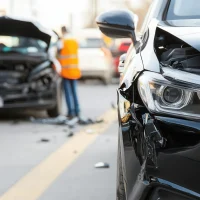 Not every car accident case is straightforward. While some claims involve clear liability and relatively minor injuries, others present complex questions about how the collision occurred, who was at fault, the extent of the victim’s injuries, and the long-term financial impact of those injuries. In these cases, expert witnesses can play a critical role in establishing the facts and explaining technical issues that are beyond the knowledge of the average juror.
Expert witnesses provide objective opinions based on their education, training, and professional experience. Their testimony can help insurance companies, judges, and juries understand complicated evidence and make informed decisions about liability and damages. At Lee Cossell & Feagley, LLP, our Indianapolis auto accident attorneys work with highly qualified experts when appropriate to build strong, evidence-based cases for injured clients throughout Indianapolis and the surrounding communities.
What Is an Expert Witness?
An expert witness is someone with specialized knowledge in a particular field who is qualified to offer professional opinions in legal proceedings. Unlike lay or fact witnesses, who testify about what they personally saw or experienced, expert witnesses analyze evidence and explain their conclusions using scientific, medical, engineering, or economic principles.
Expert testimony is especially valuable in car accident litigation because many important issues require technical analysis. For example, determining vehicle speed before impact, explaining the mechanics of a spinal injury, or calculating future lost earnings often requires knowledge beyond that of the average person.
Expert witnesses must satisfy Indiana’s evidentiary standards before they are permitted to testify. Their opinions must be based on reliable methods and sufficient facts, not speculation or unsupported assumptions.
Accident Reconstruction Experts
One of the most frequently used experts in serious car accident litigation is the accident reconstruction engineer. These professionals use engineering principles, physics, mathematics, and computer modeling to determine how a collision occurred. They analyze evidence such as vehicle damage, skid marks, roadway measurements, event data recorder (“black box”) information, photographs, surveillance video, and police reports. An accident reconstruction expert may be able to determine, for example:
- Vehicle speeds before impact
- Braking distances and reaction times
- The point of impact
- Whether a driver attempted to avoid the collision
- The sequence of events in a multi-vehicle crash
- Whether the physical evidence supports or contradicts witness statements
Their analyses can be particularly valuable when drivers provide conflicting accounts of what happened. In many cases, physical evidence tells a much more reliable story than memories formed during a traumatic event.
Medical Experts
Medical experts are often essential when the nature, cause, or severity of an injury is disputed. Insurance companies frequently argue that an injured person’s symptoms are exaggerated, unrelated to the accident, or caused by pre-existing medical conditions. A treating physician or independent medical specialist can explain how the collision caused the injuries and why certain treatments were medically necessary. For example, medical experts may testify regarding:
- The diagnosis and extent of injuries
- The relationship between the accident and the injuries
- Whether treatment was reasonable and necessary
- Permanent impairments
- Future medical care needs
- Physical limitations resulting from the injuries
Their opinions help connect the accident directly to the victim’s medical condition and provide credibility when insurers attempt to minimize injuries.
Vocational Rehabilitation Experts
Some injuries permanently affect a person’s ability to work. When that happens, vocational rehabilitation experts can evaluate how the injuries impact future employment opportunities. These professionals assess factors such as education, work history, job skills, physical restrictions, and labor market conditions. They may determine that an injured individual can no longer perform the same occupation or must transition into lower-paying employment because of permanent limitations. Their analysis helps establish damages related to diminished earning capacity rather than simply documenting wages already lost.
Economists
Serious injuries often have financial consequences that extend far into the future. Economists help quantify those losses. Rather than simply adding up current medical bills and missed paychecks, economists calculate the long-term financial impact of an injury using accepted economic principles. They consider factors such as inflation, expected wage growth, retirement benefits, work-life expectancy, and the present value of future losses.
An economist may calculate, for instance:
-
- Future lost income
- Lost employment benefits
- Reduced earning capacity
- Future medical expenses
- Lifetime economic losses
These calculations provide juries with a reliable framework for awarding damages that accurately reflect the injured person’s future financial needs.
Human Factors Experts
In some cases, attorneys retain human factors experts to explain how people perceive hazards and react under certain circumstances. These specialists study topics such as driver attention, visibility, perception-reaction time, fatigue, distraction, and decision-making. Their testimony can help explain why a reasonably careful driver may or may not have been able to avoid a collision. Human factors experts are particularly useful in cases involving distracted driving, poor roadway design, obstructed visibility, or commercial vehicle accidents.
Engineering and Mechanical Experts
Sometimes the accident itself is caused or made worse by a mechanical failure. Mechanical engineers may examine whether defective brakes, steering systems, tires, airbags, or other vehicle components contributed to the collision or increased the severity of injuries. These experts may also evaluate roadway design, traffic control devices, guardrails, or construction zones when dangerous road conditions are suspected. Their findings can identify additional liable parties, including manufacturers, maintenance companies, contractors, or government entities responsible for roadway safety.
Why Expert Witnesses Strengthen a Case
Expert witnesses do more than provide technical opinions. They help transform complicated evidence into understandable explanations that judges, juries, and insurance adjusters can follow. Their testimony can, among other things:
- Clarify disputed facts.
- Support or refute claims about fault.
- Explain complex medical conditions.
- Quantify future financial losses.
- Increase the credibility of a personal injury claim.
Insurance companies often rely on their own experts to dispute liability or minimize damages. Having qualified experts on your side helps level the playing field and ensures your case is supported by objective, professional analysis.
Not Every Case Requires Expert Witnesses
Although expert witnesses can be invaluable, they are not necessary in every car accident case. A straightforward rear-end collision involving minor injuries may be resolved through police reports, medical records, photographs, and witness testimony alone. However, as the severity of injuries, complexity of liability, or amount of damages increases, expert testimony often becomes increasingly important. An experienced personal injury attorney can determine whether retaining experts will strengthen your case and justify the additional expense.
Building the Strongest Possible Claim
Every successful car accident case is built on evidence. While eyewitness testimony and medical records remain important, expert witnesses often provide the objective analysis needed to establish liability and fully document an injured person’s losses. At Lee Cossell & Feagley, LLP, we carefully evaluate every case to determine what evidence is needed to maximize our clients’ recovery. When expert testimony can make a meaningful difference, we work with respected professionals whose opinions are grounded in science, medicine, engineering, and economics. Our goal is to present the strongest possible case, whether during settlement negotiations or in the courtroom.
Frequently Asked Questions
What is an expert witness in a car accident case?
An expert witness is a qualified professional who provides specialized opinions on technical issues such as accident reconstruction, medical injuries, engineering, or financial losses.
When is an accident reconstruction expert needed?
An accident reconstruction expert is often helpful when fault is disputed, multiple vehicles are involved, or the cause of the crash is unclear.
Can a doctor testify about my injuries after a car accident?
Yes. Treating physicians and medical specialists can explain your injuries, discuss your treatment, and provide opinions about future medical care and permanent impairments.
Who calculates future lost wages in a personal injury case?
Economists and vocational rehabilitation experts often work together to estimate future lost income, diminished earning capacity, and other long-term financial losses resulting from serious injuries.
Do all Indiana car accident cases require expert witnesses?
No. Many cases can be resolved without expert testimony. However, experts often become important when liability, medical issues, or future damages are contested.
Contact Lee Cossell & Feagley, LLP
If you’ve been injured in a car accident, building a successful claim often requires more than simply presenting medical bills and repair estimates. In complex cases, experienced attorneys know when to bring in qualified experts who can explain technical issues, strengthen the evidence, and help maximize your recovery.
At Lee Cossell & Feagley, LLP, we have the resources and experience to build compelling car accident cases backed by credible expert testimony when appropriate. Contact us today for a free consultation. We’ll evaluate your case, explain your legal options, and fight to recover the compensation you deserve.